



Insight Sharing
Website Revamp ROI in 2026: Why Most Revamps Never Deliver Real ROI

The 5 Systems That Drive Compounding Growth
Most websites aren’t built for performance, they’re built for display. And the cost of poor UX, slow loading, unclear funnels, and outdated structure doesn’t fail loudly. It compounds silently, every single day.
That’s because website is no longer just a digital brochure. It is core revenue engine, influencing buying decisions, capturing demand, and converting attention into leads around the clock. High-ROI websites aren’t redesigned; they’re rebuilt to compound results, not through visual polish, but by rebuilding conversion, performance, sales, analytics, and AI infrastructure into a single system.
Real-world redesign studies make this shift clear. In a 2026 review of dozens of website revamp projects, many businesses saw conversion rates increase by 40–100%, bounce rates drop significantly, and lead generation spike, often within 3–6 months of relaunch (New Perspective Design, 2026). Not because they changed colours or layouts, but because they rebuilt the website as a system, not a surface.
These five systems determine whether website compounds revenue or quietly bleeds it over time.
1: Performance & Search Visibility System
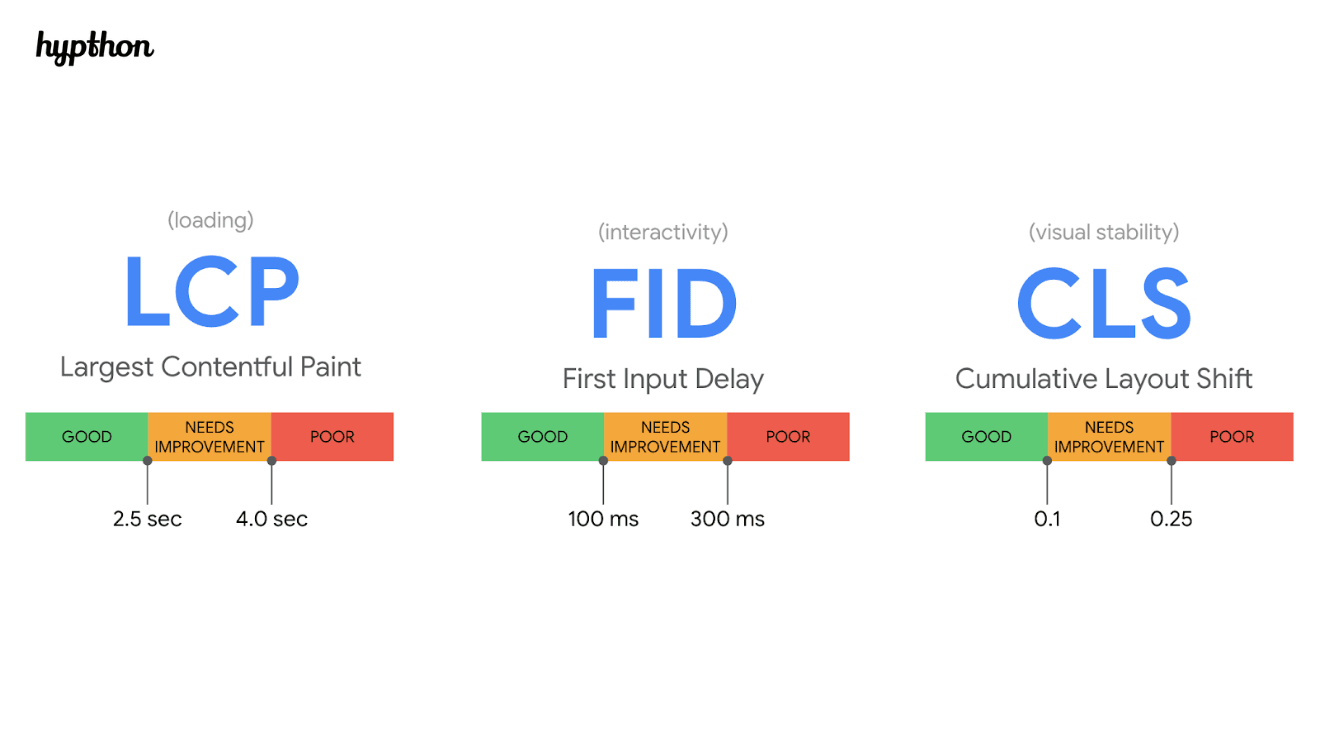
Figure 1: Core Web Vitals Benchmark
Search Algorithm Reality:
Google's ranking algorithms increasingly prioritize websites meeting Core Web Vitals ( https://developers.google.com/search/docs/appearance/core-web-vitals )benchmarks, with page experience signals directly impacting search visibility and organic traffic generation.
Problem Category | Legacy Issues | Revamp Solutions | Business Impact |
| Loading Performance | • Slow server response times • Unoptimized images • Excessive JavaScript | • Advanced caching (60-80% faster) • Next-gen image formats (WebP, AVIF) • CDN integration | 25-40% organic traffic increase |
| Mobile Experience | • Non-responsive layouts • Touch interface problems • Viewport errors | • Mobile-first design • Touch-optimized interfaces • PWA features | 15-25% mobile conversion boost |
| Technical SEO | • Missing structured data • Weak internal linking • Poor meta optimization | • Rich snippet markup • Strategic link architecture • Advanced meta optimization | 20-35% search visibility growth |
*Performance improvements may vary depending on industry, baseline condition, and implementation scope
Deep Dive: Learn more about how we utilize Google PageSpeed Insights for SEO to bridge the gap between technical speed and search rankings. ( Click here )
Measurable Results from Technical Optimization:
- 30-50% reduction in bounce rates across all devices
- 15-30% improvement in average search ranking positions
- Enhanced domain authority and featured snippet opportunities
2. Conversion Optimization System
The Reality Check
Industry benchmarks show most websites convert only 2–3% of visitors. This is rarely a traffic problem, it is a friction problem. A strategic overhaul transforms the site from a passive digital brochure into a high-performance engine designed for action.
Strategic Optimization Pillars
To bridge the gap between a "visit" and “conversion”, we implement five data-driven improvements:
- A/B Tested Landing Pages Using data-validated layouts and copy to ensure the first impression leads to a measurable action.
- Friction-Free Form Design Replacing long, intimidating forms with intuitive multi-step progress bars and smart field validation.
- Behavioral CTA Placement Utilizing heat map analysis to position Call-to-Action buttons where user attention naturally peaks.
- User Journey Streamlining Simplifying navigation and removing hurdles to reduce drop-offs in the inquiry or checkout process.
- Value Proposition Clarity Shifting messaging from "Features" to "Benefits," instantly addressing visitor pain points and needs.
The ROI Bottom Line: By optimizing for conversion rather than just traffic, a website revamp can significantly lower the Cost Per Acquisition (CPA) and maximize the value of every visitor, offering one of the most measurable returns on investment.
3. Sales Enablement & Revenue Alignment System
The greatest friction in a modern business isn't a lack of leads, it's the fragmented handoff between marketing and sales. When a website operates in a silo, valuable prospect intelligence is lost, forcing sales teams to work with incomplete data and reactive workflows. A strategic overhaul integrates these two departments into a single, high-velocity revenue engine.
The Alignment Ecosystem | |
Strategic Sales Enablement Features | Marketing Sales Synergy |
1. Real-Time Lead Intelligence & Intent Signals
Behavioral tracking maps a prospect’s full journey in pages viewed, content consumed, and buying signals while instant intent alerts notify sales when visitors show high intent (pricing views, plan comparisons, revisits), enabling timely and relevant outreach.
2. Seamless CRM Context Sync
All website interactions clicks, downloads, submissions, and behaviors sync directly into the CRM, preserving full lead context and eliminating manual entry, missing data, and blind sales conversations.
3. Automated Qualification & Sales Prioritization
Built-in ROI calculators, dynamic forms, and demo scheduling tools qualify prospects in real time, ensuring sales teams focus only on high-potential accounts with clear intent and readiness. | 1. Centralized Content Synchronization
Up-to-date sales decks, pricing, product specs, and competitive comparisons, all managed in one unified library for instant access.
2. Cohesive Messaging Architecture
The website, landing pages, automation emails, and sales scripts speak the same language, improving clarity, trust, and brand consistency.
3. Revenue Attribution Dashboards
End-to-end tracking connects every marketing action to pipeline and revenue outcomes, enabling true data-driven decisions. |
The Outcome: By integrating these systems, shorten the sales cycle and ensure no high-value lead ever falls through the cracks of a manual handoff process.
4. Analytics & Personalization Intelligence System
A legacy website is static; it shows the same pitch to everyone, resulting in significant missed opportunities. The solution is to transition to an Advanced Personalization Framework that moves the site from reacting to traffic to proactively adapting to individual user intent.
Intelligence Drives Relevance
This framework starts with User Journey Intelligence. We track the complete customer path across all touch points, using behavioral segmentation to automatically group visitors based on their actions. This advanced intelligence then fuels accurate Attribution Modeling, finally connecting specific website interactions directly to revenue and Customer Lifetime Value (CLV).
Dynamic Content Delivery
The real business impact is delivered via the Personalization Engine. This enables the website to instantly customize itself:
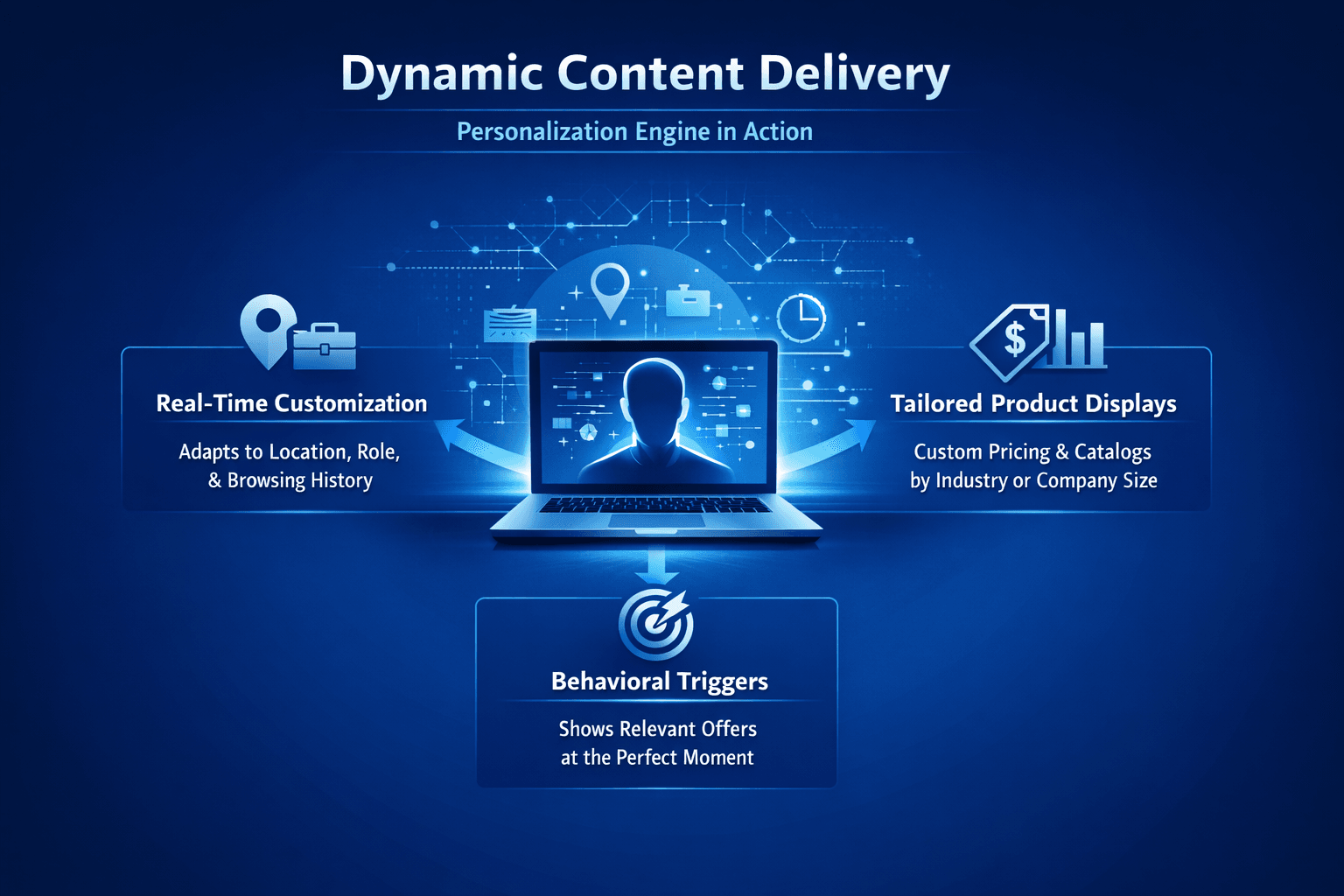
Dynamic Content Delivery
This adaptive approach, supported by progressive profiling, ensures the website is always giving the right pitch to the right person. This often yields a 15–25% improvement in marketing ROI and an increase of 10–20% in average order value, with gains compounding over time.
5. AI Automation & Scalable Infrastructure System
Legacy websites are static relics that hinder growth and require costly workarounds. A modern revamp transforms digital presence into an intelligent, automated, and continuously evolving platform built for sustained business scaling.
The Three Pillars of Modern Architecture
1. AI-Powered Automation & Intelligent UX
We integrate advanced AI to create a truly intelligent user experience that runs 24/7. This includes:
- Smart AI Chatbots (Key Differentiator): Using Natural Language Processing (NLP) to handle complex customer service inquiries, qualify leads, and provide instant support, freeing up human resources. Learn More
- Predictive Lead Scoring: Algorithms identify high-value prospects before conversion, prioritizing sales efforts.
- Continuous Optimization (AI Marketing): Machine learning engines automate A/B testing, dynamic pricing, and product/content recommendations to constantly refine performance.
2. Scalable, Growth-Oriented Infrastructure
A modern website should not be rebuilt every time business grows. The architecture behind a high-performing website is designed to scale quietly in the background—supporting new product lines, expanding teams, and global audiences without forcing costly rebuilds or structural resets. Instead of locking business into a fixed layout or rigid system, a scalable foundation allows website to evolve alongside the strategy.
By adopting a modular, multi-regional design, the site can accommodate new business units, languages, and geographic markets with minimal friction. At the same time, cloud-based auto-scaling ensures performance remains stable during traffic spikes, campaign launches, or seasonal demand—so growth never becomes a bottleneck. This infrastructure shift turns the website from a fragile asset into a resilient platform—one that absorbs growth rather than breaking under it.
3. Future-Proof Technology Stack (API-First)
We build on a flexible foundation that prevents technical debt:
- Headless/API-First Architecture: This design separates content from presentation, enabling seamless integration with any emerging MarTech tools, CRM, or future technologies.
- Omnichannel Readiness: Content can be easily distributed across web, mobile apps, social, and future channels from a single source.
The ROI Bottom Line: Investing in a scalable, AI-integrated platform is the final defense against technical obsolescence. It guarantees that website will support, rather than limit, company's growth trajectory for the next decade.
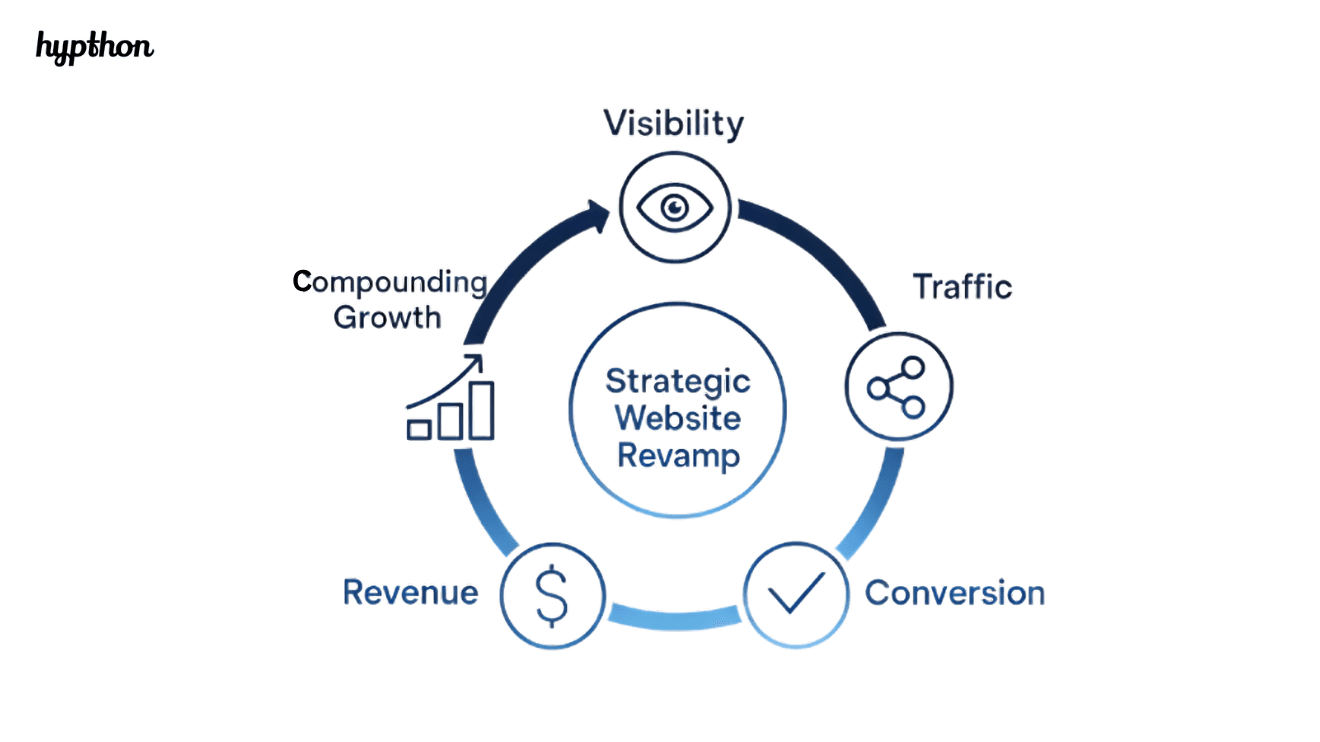
Figure 2: Chat of Strategic Website Revamp Flow
Conclusion: Website as a Growth Catalyst
A strategic website revamp is far more than a cosmetic update; it is a critical investment in the business infrastructure. By integrating conversion optimization, AI-driven automation, and sales enablement, you transform a static site into a high-performance engine.
The convergence of these modern technologies creates compounding benefits—improving lead efficiency and operational speed while significantly lowering acquisition costs. In 2026, an optimized website is no longer an option, but the primary competitive advantage for scalable, long-term revenue growth.

Explore more